
Disclosure: As an Amazon Associate I earn from qualifying purchases. How this site works
Small Trash Can Sizes and Bag Fit
Trash can sizes are listed in gallons or litres, and liner sizes do not always match. This page converts sizes and explains how to pick bags that fit your bin.
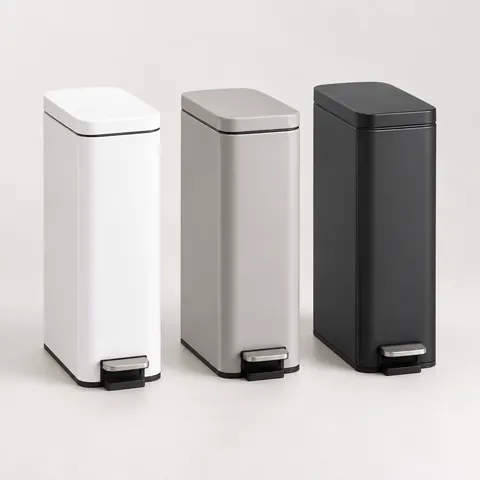 Slim bathroom bins
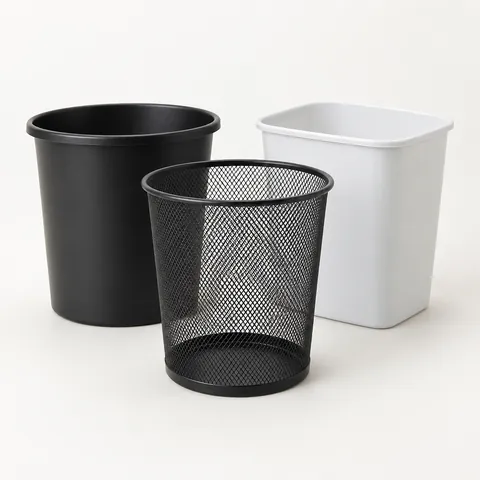 Small office wastebaskets
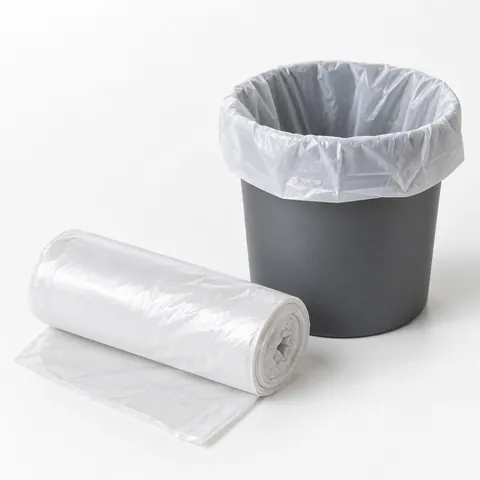 Small bin liners
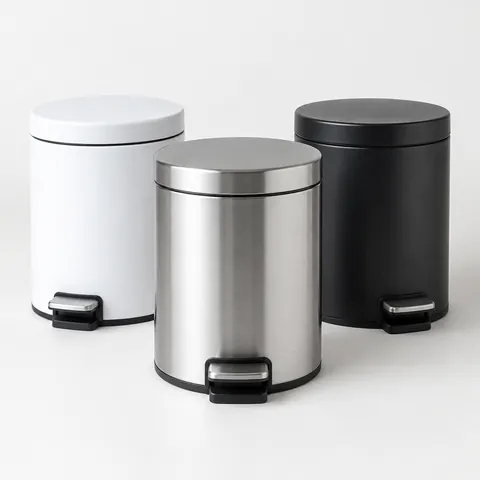 Small step trash cans
Gallons and litres
| US gallons | Litres (approx.) | Typical height |
|---|---|---|
| 1 | 3.8 | 8–10 in (20–25 cm) |
| 1.5 | 5.7 | 10–11 in (25–28 cm) |
| 2 | 7.6 | 11–12 in (28–30 cm) |
| 2.5 | 9.5 | 12–13 in (30–33 cm) |
| 3 | 11.4 | 12–14 in (30–35 cm) |
| 4 | 15.1 | 14–16 in (35–40 cm) |
| 5 | 18.9 | 15–17 in (38–43 cm) |
Heights are typical ranges; slim bins are taller and narrower for the same capacity.
Choosing liners
- Measure around the top of the bin (circumference) or its width and depth.
- Measure the depth from rim to bottom.
- Choose a bag whose width is at least half the rim circumference plus a few centimetres, and whose length is the depth plus about 10 cm to fold over.
- Or buy liners labelled for the same capacity as your bin.
Liner thickness matters for wet waste; thin office liners suit paper only. Compare small bin liners.
Why size labels vary
Manufacturers measure capacity differently — some to the rim, some to a fill line — and round the figure. Two “2-gallon” bins can differ in shape and real capacity, so check dimensions as well as the label.
What size small trash can do you need by room?
The right size depends less on the room name and more on what goes in the bin and how often you want to empty it. Paper and dry packaging can sit longer without much trouble. Food scraps, tissues, dental floss, diapers, and pet waste usually call for a smaller bin you empty more often.
For a powder room or guest bath, 1 to 2 gallons is usually enough because the bin mostly holds tissues, cotton pads, and packaging. A main bathroom often works better at 2 to 3 gallons, especially if more than one person uses it. If the floor space beside the toilet or vanity is tight, compare slim bathroom bins by footprint, not just capacity.
A bedroom bin is often 2 to 4 gallons. If it is mainly for receipts, tags, and light packaging, a simple open-top bin can work. If you use it for snack wrappers or tissues, a lid helps keep the room looking neater between emptying.
For a home office, 3 to 5 gallons is a common small-bin range because paper fills volume quickly but is usually light. If you shred documents into a separate container, the everyday office bin can be smaller. For desks, cubicles, or corners, small office wastebaskets are easiest to compare by width, depth, and rim shape.
| Location | Practical small-bin range | Best when it holds |
|---|---|---|
| Half bath or guest bath | 1–2 gal | Tissues, cotton pads, wrappers |
| Main bathroom | 2–3 gal | Daily personal-care waste |
| Bedroom | 2–4 gal | Dry trash, tags, light packaging |
| Home office | 3–5 gal | Paper, envelopes, desk trash |
| Laundry area | 2–4 gal | Lint, dryer sheets, tags |
| Car or RV | 1–2.5 gal | Receipts, wipes, snack wrappers |
| Countertop food-scrap bin | 1–1.5 gal | Short-term compostable scraps |
How to measure the space before you buy
A small trash can can be the right capacity and still be wrong for the spot. Before buying, measure the floor area, the height under any counter or shelf, and the swing or lift path of the lid. A step can needs room for your foot in front and room for the lid to rise behind or above the rim.
Use outside dimensions when checking fit. Product capacity describes interior volume, but handles, pedals, rounded corners, and overhanging lids add to the real space the bin takes up. If a listing gives only capacity and height, look for the top width and base width before choosing it for a narrow gap.
A few quick checks help avoid a poor fit:
- Leave a little clearance on both sides so you can pull the can out without scraping the wall or cabinet.
- If the can sits under a sink, check for plumbing, garbage-disposal parts, and cabinet hinges, not just the open floor.
- For a lid that flips up, measure the full open height, not only the closed height.
- For a pedal bin, make sure the pedal will not be blocked by a bath mat, cabinet toe kick, or door swing.
- For a bin near a toilet, choose a surface that is easy to wipe and avoid textured details that trap dust.
Round cans fit well in open corners and are easy to line, but they waste some space against a wall. Rectangular and slim cans use wall space more efficiently, especially beside a vanity, desk, washer, or toilet. Tapered cans can be easier to empty, but the bag may slip down unless the rim holds it firmly.
Bag fit details that prevent slipping, bunching, and leaks
A liner that technically fits the gallon size can still be annoying if it is too short, too narrow at the opening, or too loose around a tapered rim. The most common problem with small cans is a bag that falls inside after the first few pieces of trash. A close second is a bag that fits the rim but does not reach the bottom, leaving the weight hanging from the top edge.
When comparing small bin liners, look for three things: open width, length, and material. The open width has to go around the rim with enough extra to fold over or tuck under the lid. The length has to reach the bottom and still leave enough overhang to secure the liner.
Use this simple check after you put in a new bag:
- Push the liner all the way to the bottom so there is no air pocket under it.
- Fold the top over the rim by a few inches, or tuck it into the liner-retaining ring if the can has one.
- Add a few pieces of light trash and see whether the bag slides down.
- Lift the bag by the edges before it is full. If the top feels tight already, choose a longer bag or empty sooner.
- For wet bathroom or food waste, check the bottom seam after removal. If it stretches or seeps, use a stronger liner or a smaller load.
Drawstring bags are convenient when the can is close to the bag size, but they can bunch under a tight lid. Flat-top bags are easier to fold neatly over very small bins. Handle-tie bags can help if you carry trash across the house, but the handles may reduce usable bag height in a short can.
Open top, swing lid, step can, or removable bucket?
The lid style affects usable capacity and bag fit. An open-top bin is simplest and gives you the full opening, which is helpful for paper and dry trash. The trade-off is that waste is visible, and bathroom or food odors are less contained.
A swing lid hides trash but takes away some opening space. It can also push light liners down if the bag is not secured. This style works best for dry waste and rooms where appearance matters more than hands-free use.
A step can is useful in bathrooms, laundry rooms, and anywhere you may have damp hands. Check the pedal and hinge because these parts add depth beyond the bucket itself. A step can with a removable inner bucket is easier to clean, but the inner bucket slightly reduces capacity compared with a single-wall bin of the same outside size.
Countertop scrap bins are a separate case. A smaller size is usually better because food scraps should not sit for long. Look for a smooth interior, a lid that opens easily while cooking, and a size you will actually empty before odors build.
Frequently asked questions
Is a 2-gallon trash can big enough for a bathroom?
Yes, a 2-gallon can is often enough for a half bath or a lightly used bathroom. For a main bathroom used by several people, 2 to 3 gallons is usually more practical because tissues, packaging, and personal-care waste add up faster.
What size bag fits a 3-gallon trash can?
A bag labeled for 3 gallons is the starting point, but the rim shape matters. Check that the bag is wide enough to fold over the top and long enough to reach the bottom with extra overhang. If the can is tall and slim, you may need a longer liner than the gallon label suggests.
Can I use grocery bags in a small trash can?
Sometimes, but they fit best in short cans with a smaller rim. Many grocery bags are too narrow for rectangular bathroom bins and too shallow for taller slim cans. They also vary in strength, so they are better for dry, light trash than wet waste.
What is the best small trash can shape for a narrow bathroom?
A slim rectangular can usually uses narrow bathroom space better than a round can. Measure the gap beside the toilet or vanity and check the can’s outside width, depth, and lid clearance. If the can has a pedal, make sure there is room for your foot in front.
Why does my small trash bag keep falling into the can?
The bag is probably too short, too narrow at the rim, or not held in place by the lid. Try a liner with more length, more rim overhang, or a can with a retaining ring. Pushing the bag fully to the bottom before use also helps reduce downward pull.
Disclosure: As an Amazon Associate I earn from qualifying purchases. This site may earn a commission when you buy through its links, at no extra cost to you. Product details come from public manufacturer information; always check the merchant page for current specifications and prices. We have not hands-on tested the products described here.